
Plugging into a regular household outlet technically charges the car, assuming you're fine adding a few miles an hour and waiting most of the weekend to fill up. Ocean-Side Electric handles electric vehicle (EV) charger installation for drivers in Rehoboth Beach, DE, and nearby areas who'd rather plug in at night and leave with a full battery. We'll check what your panel can actually support, talk through where the unit should go, and give you one flat price covering the wiring, the permit, and the inspection.
Ocean-Side Electric is a veteran-owned electrical company and electric vehicle charging station contractor located in Rehoboth Beach, DE. Our crew specializes in Level 2 units, Tesla equipment, dedicated circuit installation, panel load evaluations, and permitted work that passes inspection the first time. Repairs, panel upgrades, rewiring, lighting, smart home wiring, and home electrical inspections fill out our services, plus light commercial work for small commercial properties in the area.
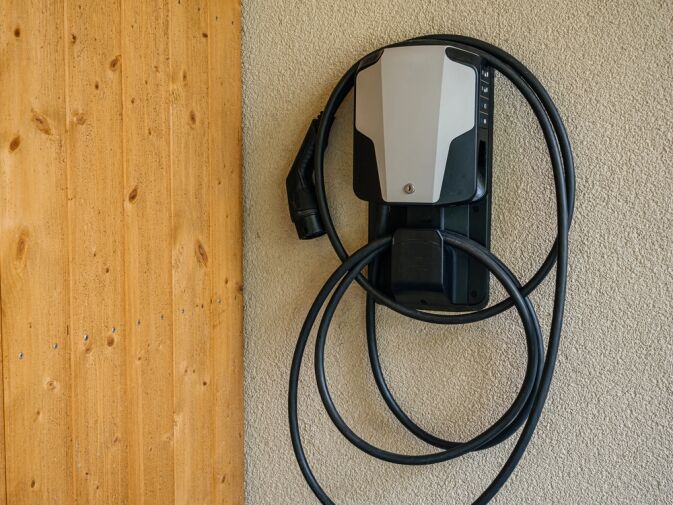
The frustration usually shows up within the first month of ownership. That standard 120-volt outlet in your garage adds three or four miles of range per hour, which is fine if you drive to the market and back but useless after a trip up to Wilmington. Public charging fills the gap until you've spent enough evenings sitting in a parking lot to decide there has to be a better way. Meanwhile, the charger that came with the car sits in the trunk doing nothing useful.
The gap comes down to voltage and dedicated capacity. Level 2 charging runs at 240 volts on a circuit of its own, typically 40 or 50 amps, which is roughly what an electric range or a clothes dryer pulls. Most homes were never wired with a spare circuit that size sitting unused, and older panels around here are often close to full already. Add a heat pump, a hot tub, or a second refrigerator to a 100-amp service, and there may not be room left without some planning. Running a heavy circuit also means getting the wire gauge, the breaker, and the distance from the panel right, since a long run on undersized wire loses voltage and heats up.
Our process starts with a load calculation and a walk of the route. We look at your panel capacity, the distance to where the car parks, and whether the run goes through a finished wall, an attic, or along a garage ceiling. Placement gets decided with the charging port location and cable length in mind, so you're not stretching a cord across the hood every night. When capacity is tight, load management devices sometimes let a charger share available power instead of forcing a full service upgrade. That option has saved a number of our customers real money. Permits get pulled, the circuit gets run, the unit goes up, and a licensed Delaware inspection agency signs off.
After that, charging stops being something you think about. You plug in when you get home, and the car is full by morning at roughly a fifth of what public charging costs. Homes with EV charging stations already installed have also become noticeably easier to rent and sell around here, since guests and buyers increasingly look for one.
Here's what our crew handles on the charging side, from the first load calculation to the final inspection.

Every charger we install goes in under permit and gets inspected by a licensed Delaware inspection agency, which is what protects you at resale and with your insurer. Our team handles the paperwork and scheduling so you're not chasing agencies or filling out applications.
Before anything gets ordered, our crew calculates what your home already draws and compares it against your service capacity. That evaluation tells you whether the existing panel handles a charger as-is, needs a few circuits reorganized, or calls for a service upgrade first.
Level 2 charging needs its own circuit running straight back to the panel, sized to the unit's amperage and the length of the run. Wire gauge, conduit, and breaker selection get matched to the manufacturer's spec rather than estimated, which also keeps your equipment warranty intact. Running slightly heavier wire now costs very little and leaves room for a faster charger later.
Most residential EV chargers we install are Level 2 units running at 240 volts, which turns an overnight stretch into a full battery. Hardwired and plug-in versions both work well, with the choice affecting your amperage ceiling and whether the unit travels with you if you move.
Older or failing units come out, and new ones go in, often reusing the existing circuit when it's sized correctly for the replacement. EV charger replacement also comes up when someone switches vehicle brands or wants faster charging than their original unit delivers. Our crew verifies the existing wiring is adequate before reusing any of it.
Tesla Wall Connectors, along with electrical vehicle chargers from most other major manufacturers, all fall within what our crew installs and commissions. Setup includes connecting to your home network, configuring the amperage limit, and testing a full charge cycle before we leave. Two-car households often want a second unit or a shared-power configuration, and both are workable.
Before you call anybody, it's worth checking whether a ground fault circuit interrupter (GFCI) outlet somewhere has tripped, since one button in a bathroom can knock out receptacles in three other rooms. If that doesn't do it, our electrical repairs pick up where the easy checks leave off, and we'll tell you honestly when something's a small fix versus a bigger conversation.
Most homeowners want to know how long they'll be without power, and for a straightforward swap, you're usually looking at a single day rather than a weekend in the dark. Electrical panel upgrades involve the utility, a permit, and an inspection by a licensed agency, so we handle that scheduling and keep you posted as each piece lines up.
Rewiring doesn't have to happen all at once, and plenty of families stay in the house while we work through it room by room. Breaking whole-home rewiring into phases spreads out the cost and the mess, usually starting with the areas that pose the most risk or see the heaviest use.
Cathedral ceilings, spray foam insulation, and finished attics all make running new fixtures trickier than the online tutorials suggest. Retrofit work is a regular part of our lighting installation service, and there's usually a path to what you want without tearing open half the ceiling.
Low-voltage systems and line-voltage fixtures each have their place, and picking the wrong one means either weak light or an install that costs more than it needed to. Sorting through that trade-off is part of planning any outdoor and security lighting project, along with deciding what runs on timers, photocells, or motion.
If your spouse or your guests can't figure out how to turn on a lamp, the system failed no matter how impressive the app looks. Keeping things simple enough for everyone in the house is our whole approach to smart home electrical work, which usually means physical switches that still work normally alongside whatever automation you've added.
There's a real difference between adding another outlet to an existing circuit and running a true dedicated circuit, even though both end with a receptacle on the wall. Dedicated circuits and electrical additions give one appliance its own path back to the panel, which is what heavy equipment like a compressor, a range, or a hot tub actually needs. Adding a plug where you want one is the simpler request, and we're glad to do that too.
Crooked cover plates and mismatched device colors bug our owner more than he'd probably admit, so everything we install goes in straight and consistent throughout the room. Beyond the finish details, our outlet and switch installation work covers ground fault circuit interrupter (GFCI) and AFCI protection, dimmers, USB receptacles, and swapping out devices that have gotten loose or discolored with age.
You'll walk away from ours with a written report, photos of anything questionable, and a list sorted by what needs attention now versus what can wait a few years. Home electrical inspections lose most of their value when the findings arrive as a shrug and a verbal summary, so we put it in writing.
Builders and general contractors keep calling us back because we show up on the day we said we would and don't hold up the next trade waiting on our rough-in. That reliability matters as much as the wiring itself on new construction and remodel electrical projects, where one late sub pushes an entire schedule sideways.
Whole-home surge protectors wear out over time, and most have an indicator light that quietly tells you when the unit has absorbed all it can. Checking that light is a small habit worth building, and it's something we point out during any surge protection and electrical safety work we do. Many quality units carry a connected equipment warranty as well, which is worth knowing about before you pick one.
Charging equipment lives on your wall for a decade or more, so here's what hiring our crew for the electric vehicle charger installation gets you.
A charger that stops working or a tripping circuit gets prompt attention, and someone from our team can be reached around the clock.
Financing is available when the job includes a panel or service upgrade, which keeps a bigger project from turning into a long wait.
Site visits and estimates come at no cost, so you'll know your panel's situation and the full price before ordering equipment.
Our veteran-owned crew lives and works in these communities, and standing behind the job long after inspection is part of how we operate.
Discounted pricing goes to active military, veterans, first responders, teachers, and seniors, so mention it whenever you get in touch.
Equipment from manufacturers we trust goes on your wall, and many premium components we install come with lifetime warranty coverage rather than the usual short window.
An electrician must compare the charger's electrical requirements with the panel's available capacity, service size, and existing household demand. An EV charger installation may require a dedicated circuit, new breakers, load management, or a panel upgrade if the current system can't support the added load.
The City of Rehoboth Beach requires permits for work involving electrical systems, and Delaware requires inspections for electrical work performed under a homeowner permit. A licensed electrician can confirm the permits, inspections, and local requirements that apply to your EV charger installation.
A straightforward EV charger installation may fit into a single visit when the panel has enough capacity, and the parking area sits near the electrical equipment. Long wiring routes, outdoor trenching, panel changes, permit scheduling, or service upgrades can add more time.
Level 2 equipment generally charges an electric vehicle faster than Level 1 charging through a standard 120-volt outlet, which makes it a popular choice for regular home charging. The right EV charger installation depends on your vehicle, daily mileage, available electrical capacity, and overnight charging window.
The electrician reviews the vehicle and charger specifications, checks the panel, chooses a mounting location, plans the wiring route, and installs the required circuit and equipment. After completing the EV charger installation, the electrician tests the unit and verifies that its settings and electrical connection operate as intended.
FAQs reviewed by Robert Miller, owner of Ocean-Side Electric, a local electrician serving Rehoboth Beach, DE, and beyond.
Reach out to us for a free estimate, and we'll tell you what your panel can handle before you buy a thing. You'll have the full price, permit, and inspection included before we schedule the work.
Business Name: Ocean-Side Electric
Address: Rehoboth Beach, DE, 19971
Phone: 302-396-5889
Business Hours:
Monday-Friday: 7:30 AM to 4:00 PM
Saturday: 8:00 AM to 12:00 PM
Sunday: Closed
Emergency Service Available
Financing is available
Military, First Responder, Teacher & Senior Discounts
We're proud to offer special discounts to active military, veterans, first responders, teachers, and senior citizens. Contact us to learn more.
Premium Products & Extended Warranties
We install high-quality electrical products from trusted manufacturers. Many of our premium panels and components qualify for lifetime warranties, giving you longer-lasting protection than standard manufacturer warranties.